I cannot conceive of the time when knowledge of soils will be complete. Our expectation is that our successors will build on what has been done, as we are building on the work of our predecessors.
- R.S. Smith, Director of the Illinois Soil Survey, 1928
Who would have thought that India, which once lived in a “ship to mouth” situation with heavy dependence on food aid under the US Public Law 480 programme in the 1960s, would one day become the world’s largest rice exporter? In FY25, India exported 20.2 million tonnes (MT) of rice in a global market of 61 MT. At the same time, the country operates the world’s largest food distribution programme—the PM Garib Kalyan Yojana—which provides 5 kg of free rice or wheat per person per month to more than 800 million people. Despite this massive distribution, the Food Corporation of India still holds around 57 MT of rice, the highest stock in the last 20 years and nearly four times the buffer norm of 13.54 MT as of July 1, 2025. [1]
About the UN Decade on Ecosystem Restoration
The United Nations General Assembly has declared the period from 2021 to 2030 as the UN Decade on Ecosystem Restoration. This global initiative is led by the UN Environment Programme and the Food and Agriculture Organization of the United Nations, with support from various partners. Its objective is to prevent, stop, and reverse ecosystem loss and degradation across the world. The programme aims to restore billions of hectares of land and water ecosystems. As a worldwide call to action, the UN Decade brings together political commitment, scientific knowledge, and financial resources to scale up ecosystem restoration efforts on a large scale. [2]
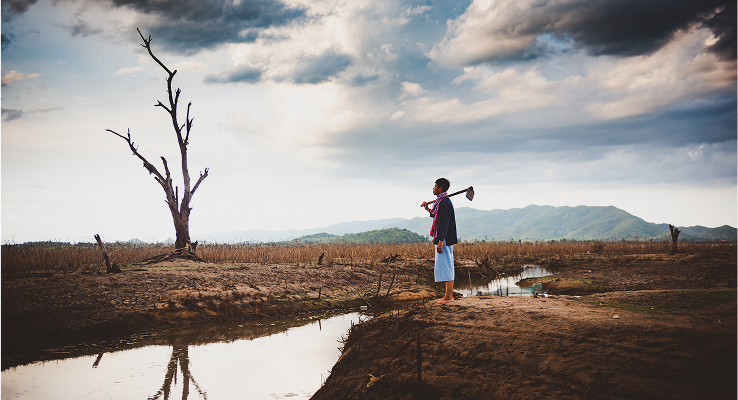
What is Soil:
Land, then, is not merely soil; it is a fountain of energy flowing through a circuit of soils, plants, and animals.
- Aldo Leopold, A Sand County Almanac, 1949
Soil is not merely dirt; it is a living ecosystem that contains billions of bacteria, fungi, and other microorganisms. These organisms play a crucial role in supporting plant growth, maintaining clean water, and balancing the environment. The capacity of soil to work as a living system is known as soil health. Healthy soil carries out several important functions, including regulating the movement of water, supporting plant and animal life, filtering harmful pollutants, cycling essential nutrients such as carbon and nitrogen, and providing physical support for plant roots as well as human structures. When soil remains healthy, it leads to better crop production, cleaner water, and a more sustainable environment. [3]
Soil and water are two basic resources essential for human survival, with more than 95 percent of the food we consume coming directly or indirectly from them. Discussions at the United Nations COP28, November 2023, climate summit emphasized the importance of adopting informed practices to strengthen soil health for resilient agrifood systems. The close relationship between soil and water forms the backbone of agricultural systems and is vital for achieving the United Nations Agenda 2030. However, changing climate conditions along with human activities are putting increasing pressure on both soil and water resources. [4]
In India, the importance of maintaining good soil health and adequate water availability is especially critical, as nearly 50 percent of the country’s net sown area depends on rainfall and contributes about 40 percent of total food production. On World Soil Day 2023, the Food and Agriculture Organization of the United Nations (FAO), under the theme “Soil and water, a source of life,” highlighted the need to raise awareness about the strong link between soil and water in building sustainable and resilient agrifood systems. The FAO also stressed the importance of engaging and empowering individuals to take active steps toward improving soil health. [5]
Soil Health in India
The nation that destroys its soil, destroys itself.
- Franklin Delano Roosevelt
Agriculture in India faces several challenges related to soil management. Most soils across the country have low nutrient levels, with the average soil organic carbon (OC) estimated at around 0.54 percent. India is also dealing with serious issues of land degradation and declining soil health. Nearly 30 percent of the country’s total geographical area is affected by land degradation, and the deficiency of multiple plant nutrients is negatively impacting the nutritional intake of the population.
Nutrient depletion in soils, combined with improper fertilizer application practices, has resulted in declining agricultural productivity. Ensuring adequate nutrient replenishment, applying fertilizers based on soil type and test results, and increasing organic matter content in soils are essential steps for sustainable food production. It is also important to note that India loses an estimated 3 billion tonnes of soil every year due to water and wind erosion.
A study coordinated by the ICAR’s Indian Institute of Soil Science (IISS), Bhopal, analysed 2,54,236 soil samples collected from 620 districts across 29 States. The study found that soils with low organic carbon show higher micronutrient deficiency, while soils with higher organic carbon have fewer deficiencies. The analysis also showed that organic carbon levels are closely linked with natural factors such as rainfall, temperature, and elevation. Areas at higher elevations generally have higher organic carbon, while low-lying regions tend to have lower levels. High-temperature regions such as Rajasthan and Telangana were observed to have low organic carbon, indicating a negative relationship between temperature and soil organic carbon. [6]
The study further highlighted that temperature, rainfall, and elevation influence organic carbon levels regardless of crops or cropping patterns. To assess the impact of farming practices, scientists developed an Agri-ecological base map, which can support policy decisions related to land degradation and carbon credits. The findings showed that imbalanced fertilizer use, especially excessive use of urea and phosphorus, has reduced organic carbon in several regions, including parts of Haryana, Punjab, and western Uttar Pradesh. The study also warned that rising temperatures due to climate change may further reduce soil organic carbon in the future, negatively affecting soil health, carbon storage, and increasing heat and carbon emissions from soil. [7]
According to the Ministry of Agriculture and Farmers Welfare, based on the analysis of 44.91 lakh soil samples under the Soil Health Card Scheme, Indian soils show widespread nutrient deficiencies: nitrogen (76%), phosphorus (14%), potassium (10%), organic carbon (58%), sulphur (27%), iron (29%), zinc (39%), boron (38%), and manganese (12%). [8]
Out of more than 8.8 million soil samples tested under the Soil Health Card Scheme in 2024, less than 5 percent of soils were found to have high or sufficient nitrogen (N). Only 40 percent had adequate phosphorus (P), 32 percent had sufficient potassium (K), and just 20 percent had adequate soil organic carbon (OC). OC is a key indicator of soil health as it influences the soil’s physical structure, chemical balance, and biological activity, which together determine water retention and nutrient use efficiency. There is ongoing discussion about the ideal OC level. While the Indian Institute of Soil Science considers 0.5–0.75 percent OC to be adequate, World Food Laureate Rattan Lal suggests that soils should ideally contain 1.5–2 percent carbon. In addition, Indian soils show moderate to severe deficiencies of sulphur and micronutrients such as iron, zinc, and boron. It would not be an overstatement to say that many Indian soils require urgent corrective measures to restore their health and ensure the sustainable production of nutritious food. [9]
In some regions, the use of nitrogen fertilizers is excessive, while phosphorus and potassium are applied in insufficient quantities. For instance, in Punjab, nitrogen usage exceeds recommended levels by 61 percent, whereas potassium use is 89 percent lower than required and phosphorus use is short by 8 percent. A similar pattern is observed in Telangana, where nitrogen is overused by 54 percent, while potassium and phosphorus use fall short by 82 percent and 13 percent, respectively. Many other states face comparable imbalances. Such uneven application of N, P, and K, along with the neglect of micronutrients, leads to poor productivity outcomes. Across India, the fertilizer-to-grain response ratio has sharply declined from 1:10 in the 1970s to just 1:2.7 by 2015. [10]
Furthermore, the use of granular urea results in significant nitrogen losses, with only about 35–40 percent of the applied nitrogen being taken up by crops. The remaining nitrogen is either released into the atmosphere as nitrous oxide—a greenhouse gas that is 273 times more powerful than carbon dioxide—or leaches into groundwater, leading to nitrate contamination and unsafe drinking water. As a result, the imbalanced use of N, P, and K fertilizers is contributing more to pollution than to yield improvement. In addition, a considerable quantity of urea is diverted for non-agricultural purposes and also finds its way into neighbouring countries. This situation clearly calls for urgent corrective action. [11]
Causes for Loss of Soil health:
The Green Revolution of the 1960s–70s helped India achieve self-sufficiency in food grain production, especially in wheat and rice. Programmes such as the Intensive Agricultural District Programme (IADP) and the Intensive Agricultural Area Programme (IAAP) played a key role by promoting high-yielding variety (HYV) seeds, assured irrigation, and the increased use of chemical fertilizers like urea, DAP, and potash. These measures led to rapid gains in crop productivity and helped overcome food shortages. However, the strong focus on nitrogen-based fertilizers, supported by subsidies, encouraged their excessive and imbalanced use over time. This gradually reduced soil organic matter and affected beneficial soil microorganisms, which are vital for maintaining soil fertility and long-term soil health.
In regions such as Punjab, Haryana, and western Uttar Pradesh, assured irrigation, minimum support prices, and procurement systems further pushed farmers towards repeated cultivation of the same crops, mainly wheat and rice. This continuous monocropping, along with limited crop rotation, depleted specific nutrients in the soil and increased dependence on chemical inputs. While these programmes were introduced with the right intention to ensure food security during a critical period, the long-term decline in soil health occurred mainly due to prolonged reliance on subsidies, weak advisory support on balanced nutrient use, and limited emphasis on sustainable soil management practices, rather than the schemes themselves
Another major problem was the overuse of water through continuous flood irrigation, particularly in states like Punjab, Haryana, and western Uttar Pradesh. Excess irrigation caused nutrient leaching, soil erosion, and in many areas led to waterlogging and soil salinity, making the soil less productive over time.
The Green Revolution also promoted monocropping, where the same crop (especially wheat and rice) was grown year after year. This reduced crop diversity disturbed the natural nutrient cycle of the soil, leading to micronutrient deficiencies such as zinc, iron, and Sulphur. Over time, the soil became compact, hard, and less capable of holding water and nutrients.
In addition, the heavy use of chemical pesticides and herbicides damaged soil biodiversity by killing earthworms and beneficial insects. This weakened natural soil structure and reduced the soil’s natural ability to recover. Although the Green Revolution increased food production in the short term, it unintentionally degraded soil health in the long run, creating problems like declining fertility, hardpan formation, reduced water retention, and higher dependency on chemical inputs.
On World Soil Day, observed every year on 5 December, experts highlight five major reasons behind the decline in soil health worldwide, along with possible solutions. [12]
Drought
According to the UNCCD’s Global Land Outlook report, more than one-third of the world’s population lives in areas facing water scarcity. As land becomes degraded, soil gradually loses its capacity to hold water, which leads to loss of vegetation and creates a harmful cycle of drought and erosion. Climate change has further intensified this problem, especially in regions like Sub-Saharan Africa, where it has contributed to food insecurity and famine
Adopting better water management practices such as drip irrigation, rainwater harvesting, and ecosystem restoration can help improve soil moisture levels and reduce the negative impacts of drought.
Land degradation
Human activities have altered over 70 percent of the Earth’s land surface, resulting in widespread degradation of ecosystems such as forests, peatlands, and grasslands. This degradation reduces soil fertility, lowers crop yields, and threatens food security.
Extreme weather events, including heavy rainfall followed by long dry periods, speed up land degradation. At the same time, deforestation and overgrazing compact the soil and remove essential nutrients. To address this issue, practices such as adding compost and organic matter, improving irrigation methods, and using mulching to retain soil moisture are important. Conservation agriculture plays a key role in restoring soil health and preventing further degradation.
Industrial farming
Although industrial farming produces large quantities of food, it has serious negative effects on soil health. The use of heavy machinery, frequent tillage, monocropping, and excessive application of fertilizers and pesticides damages soil structure, pollutes water sources, and reduces biodiversity. Industrial agriculture is also responsible for about 22 percent of global greenhouse gas emissions.
Sustainable farming methods such as zero tillage, crop diversification, integrating livestock into cropping systems, and adding organic matter can help protect soil quality and revive soil biological activity. Practices like no-till farming, cover cropping, and agroforestry improve soil structure, reduce erosion, and enhance fertility. For instance, several African countries are adopting the “forest garden” approach, which combines trees and shrubs with crops to improve soil fertility and increase yields for small farmers.
Chemicals and pollution
Soil pollution, though often not visible, poses serious risks to plant, animal, and human health. Industrial activities, mining, poor waste disposal, and unsustainable farming introduce harmful substances such as synthetic fertilizers, pesticides, and heavy metals into the soil.
Excessive use of fertilizers disturbs the natural nutrient balance, while pesticides damage beneficial soil organisms like earthworms and fungi. Heavy metals such as lead and mercury accumulate in the soil and interfere with microbial activity and nutrient uptake by plants. Reducing pollution, limiting chemical inputs, and encouraging organic farming practices can help restore soil health.
Diet and nutrition
Modern dietary patterns also influence soil health through the farming systems used to produce food. Diets that rely heavily on staple crops like wheat, rice, and corn often encourage intensive monoculture farming, which depletes soil nutrients, reduces organic matter, and increases soil compaction and erosion.
Similarly, diets high in animal-based foods, especially beef, increase pressure on land for grazing and feed production. Overgrazing by livestock worsens soil compaction and erosion. Shifting towards more diverse and plant-based diets can reduce the need for intensive farming. By aligning food choices with sustainable agricultural practices, countries can improve soil health and secure food production for the future.
Principles to maintain the soil:
Maintaining good soil health is based on four key principles: [13]
-
Keep living roots in the soil to support helpful microbes.
-
Reducing soil disturbance such as excessive tillage.
-
Keeping the soil covered with crop residues or cover crops.
-
Increasing biodiversity through crop rotation and mixed cropping.
Practices like cover cropping and reduced tillage help:
-
Protect soil from erosion.
-
Improve water holding capacity.
-
Enhance nutrient movement in the soil.
-
Lower farming costs.
Overall benefits of healthy soil include:
-
Better crop productivity.
-
Higher resistance to climate stress.
-
Long-term sustainability in agriculture.
Effects of Degraded Soil and Water Resources:
Essentially, all life depends upon the soil… There can be no life without soil and no soil without life; they have evolved together.
- Dr. Charles E Kellogg, Soil Scientist and Chief of the USDA’s Bureau for Chemistry and Soils
-
Impact on Food Security
Degraded soil directly reduces food availability and quality. Healthy soil is essential for producing nutritious crops and animal fodder, as it supplies water and nutrients to plants and supports beneficial microorganisms needed for food production.
-
Loss of Soil Biodiversity
Poor soil conditions reduce the population of microorganisms and other soil life. This weakens natural nutrient cycling, lowers soil fertility, and affects the long-term ability of soil to support crops.
-
Soil Erosion and Fertility Decline
Improper soil and water management leads to erosion, loss of topsoil, and reduction in soil fertility. This results in lower crop yields and increased dependence on chemical inputs.
-
Water Quality and Availability Issues
Soil degradation affects water quality and availability. Water scarcity reduces soil biodiversity and can cause eutrophication, leading to the loss of life in rivers, lakes, and other water bodies.
-
Human Health and Environmental Risks
Excessive and improper use of pesticides and fertilizers contaminates soil and water, posing serious risks to human health and ecosystems.
-
Reduced Agricultural Productivity
Poor irrigation and drainage practices increase soil salinity and compaction. Along with rising sea levels, these factors reduce soil productivity and negatively impact agricultural output.
What is a Soil Testing Lab?
A Soil Testing Laboratory is a facility where soil samples collected from farms are scientifically analysed to determine their nutrient status, pH, salinity, organic carbon, and other key soil health parameters. The main purpose of a soil testing lab is to understand what nutrients are sufficient or deficient in the soil so that farmers can apply fertilizers in the right quantity and at the right time. This helps in improving crop yield, reducing unnecessary fertilizer use, lowering input costs, and maintaining long-term soil health.
What is an STFR Device (Colorimeter-Based)?
An STFR device (Soil Test–Fertilizer Recommendation device) is a portable digital soil testing instrument used to quickly analyze soil nutrients and provide fertilizer recommendations. The technology for STFR kit has been designed & developed by the renowned PUSA – IARI lab, New Delhi. It works on the principle of colorimetry. In this method, soil samples are mixed with specific chemical reagents that react with nutrients present in the soil. These reactions produce a color, and the intensity of that color is measured by a colorimeter inside the device. The color intensity is directly proportional to the concentration of nutrients such as nitrogen, phosphorus, potassium, and micronutrients.
Working Principle of Colorimeter
When light passes through the colored soil solution, the colorimeter measures how much light is absorbed. Higher nutrient concentration results in deeper color and greater light absorption. The device converts this reading into digital values, which are then used to generate precise fertilizer recommendations.
Benefits of Soil Testing Labs and STFR Devices
Soil testing labs and STFR devices help farmers make scientific decisions instead of guesswork. They enable targeted fertilizer application, reduce excess use of chemicals, lower cultivation costs, improve crop productivity, and protect soil health. STFR devices offer fast results at the field or village level, improve farmer–expert interaction, and support sustainable agriculture by promoting balanced nutrient management.
14 Parameters Tested by PUSA STFR Soil Lab:
Available Organic Carbon (OC)
Available Nitrogen (N)
Available Phosphorus (P)
Available Potassium (K)
Available Zinc (Zn)
Available Sulphur (S)
Available Boron (B)
Available Copper (Cu)
Available Iron (Fe)
Available Manganese (Mn)
Electrical Conductivity (EC)
pH
Lime requirement test for Acidic Soil
Gypsum requirement test for alkaline soil
Who can use the Soil Lab?
Government departments and government-approved laboratories can use the soil lab to provide reliable soil testing services to farmers.
Rural youth can establish soil testing lab enterprises as a livelihood opportunity and provide services to farmers in their area.
Farmers can set up and operate soil testing labs to test their own fields as well as offer testing services to nearby farmers.
NGOs can use the soil lab to provide free or subsidized soil testing facilities to farmers as part of developmental and welfare initiatives.
Agri-input companies can use soil testing labs to promote balanced and optimum fertilizer use among farmers, reducing excess chemical application.
Agri-input dealers can offer soil testing services alongside the sale of agricultural inputs, helping farmers make informed input decisions.
Agricultural colleges and universities can use soil testing labs for student training, research, and practical learning in soil science and nutrient management.
Challenges to Operate a Soil Lab or Soil Testing Successfully:
Soil testing in India faces several practical challenges that directly affect its reliability and usefulness for farmers. Government soil testing laboratories often deliver results with significant delays, during which farmers, unable to wait, apply fertilizers based on guesswork, leading to imbalanced nutrient use and long-term soil health damage. In many cases, test results are inconsistent, where the same soil sample shows different values for the same parameters, creating confusion and mistrust. Private laboratories, though faster, are usually expensive and unaffordable for small farmers, limiting their access to quality soil diagnostics.
In addition, there is a weak linkage between farmers and agronomists, which means test results often come without proper explanation or actionable recommendations. The absence of standard government certification for many labs raises questions about credibility. Human errors during testing, poor laboratory hygiene, and improper handling of samples further reduce accuracy. Improper soil sample collection from fields — such as wrong depth, contaminated tools, or mixed samples — also leads to misleading results, making it difficult for farmers to rely on soil testing for precise nutrient and crop management.
The Meero Labs Model:
Meero Labs provides the PUSA STFR–based Soil Testing Lab, designed to address key challenges in soil testing while ensuring accuracy, ease of use, and farmer convenience.
The STFR soil testing system is simple and user-friendly, making it easy for farmers, rural youth, and field staff to operate with minimal training.
The STFR device supports printing and SMS features, allowing instant sharing of soil test results when required.
Through the Meero Link App, farmers are digitally registered, their farm blocks are added with geo-coordinates, and soil samples are logged digitally, ensuring secure data storage on servers and eliminating the need for manual record-keeping.
Once the soil test is completed, the report is sent directly to the farmer’s WhatsApp in PDF format. The report includes lab details with logo, soil test values for 14 parameters, and crop-specific fertilizer recommendations. Each report is verified by a qualified agronomist at Meero Labs before being shared.
Farmers registered for soil testing also receive the benefit of free weather forecasting for their registered farm, including current conditions and a 15-day forecast.
The soil lab operates with a simplified, non-complex testing manual, reducing errors and operational fatigue.
After the initial registration and farm block creation, farmers do not need to repeat the process for future soil tests, saving time and effort, as all records are securely stored on a blockchain-based system that ensures data immutability, transparency, traceability, and protection against data loss or manipulation.
Meero Labs operates its own soil testing lab in Pune, offering accurate soil test reports in 48 hours at an affordable cost with strict quality control.
In addition, Meero Labs has actively supported farmers in setting up and operating their own soil testing labs across Maharashtra and Uttar Pradesh, with the aim of creating awareness, building trust in soil testing, and encouraging farmers to take interest in soil health so that they confidently adopt soil testing as a regular farming practice.
Conclusion:
Soil degradation in India poses a serious threat to agricultural productivity, environmental sustainability, and farmer livelihoods. Declining soil organic carbon, widespread nutrient imbalances, and inefficient fertilizer use highlight the urgent need for science-based soil management. Achieving Land Degradation Neutrality by 2030 is critical for meeting national food security goals and aligning with key Sustainable Development Goals, including Zero Hunger (SDG 2), Clean Water and Sanitation (SDG 6), and Life on Land (SDG 15). This requires moving beyond conventional practices toward data-driven, farmer-centric solutions that restore soil health while reducing environmental harm.
In this context, digital soil testing solutions like Meero Labs’ STFR-based soil testing system play a transformative role. By enabling accurate, affordable, and timely soil diagnostics, digitally recording farm-level data, and delivering verified, crop-specific recommendations directly to farmers, Meero Labs bridges critical gaps in soil health management. It demonstrates how technology-enabled soil intelligence can restore productivity, support climate resilience, and build a more sustainable and self-reliant agricultural ecosystem for India.
Financial Express - Dec 10, 2025 - https://www.financialexpress.com/opinion/healing-soils-in-india/3921168/
Five reasons why soil health is declining worldwide - https://www.unep.org/news-and-stories/story/five-reasons-why-soil-health-declining-worldwide
https://www.nrcs.usda.gov/conservation-basics/natural-resource-concerns/soil/soil-health
Integrated soil and water management essential to achieve food security in India: FAO - https://www.fao.org/india/news/detail-events/zh/c/1672771/
Integrated soil and water management essential to achieve food security in India: FAO - https://www.fao.org/india/news/detail-events/zh/c/1672771/
The Hindu Article, Nov 10, 2025, - Climate change, Imbalance in fertilizer use impact soil's organic carbon: ICAR Study
The Hindu Article, Nov 10, 2025, - Climate change, Imbalance in fertilizer use impact soil's organic carbon: ICAR Study
GOI - Ministry of Agriculture and Farmers Welfare
Financial Express - Dec 10, 2025 - https://www.financialexpress.com/opinion/healing-soils-in-india/3921168/
Financial Express - Dec 10, 2025 - https://www.financialexpress.com/opinion/healing-soils-in-india/3921168/
Financial Express - Dec 10, 2025 - https://www.financialexpress.com/opinion/healing-soils-in-india/3921168/
Five reasons why soil health is declining worldwide - https://www.unep.org/news-and-stories/story/five-reasons-why-soil-health-declining-worldwide - UN Environment Program
https://www.nrcs.usda.gov/conservation-basics/natural-resource-concerns/soil/soil-health